Basic queueing
Without traffic-aware shaping
A basic queue sends packets in the order they arrive. When download bursts fill the line, interactive traffic has to wait, and the network starts to feel sluggish.
Queue dynamics
What subscribers feel
LibreQoS
LibreQoS helps customer-focused operators protect busy-hour performance and deliver the kind of experience subscribers stay for.

Why LibreQoS
Operators use LibreQoS to manage congestion, improve fairness, and troubleshoot with clearer evidence.
950+
networks worldwide on LibreQoS
Production operators use LibreQoS across wireless, fiber, and dense shared-capacity environments.
2025
WISPA Product of the Year
Operator recognition backed by real deployments, not a black-box congestion story.
100G+
supported shaping tiers
Built for shared-capacity networks that need precise control from smaller pilots to very high throughput.
15m-1y
Insight history range
Move from live triage to longer-term reporting without leaving the operator workflow.
"We can afford to deploy a box at every step of the network to manage congestion at very little cost."
Louis Elliott
CEO, Streamline Internet
"LibreQoS let subscribers share higher plan speeds fairly and made the service feel much faster during prime time."
Daniel Denson
Denson Technologies
Use Cases
LibreQoS supports wireless and fiber ISPs alongside dense shared-capacity environments such as event WiFi, hospitality, aviation, and maritime networks.
Wireless ISP
Reduce peak-hour complaints and keep shaping aligned to real AP, site, and backhaul bottlenecks.
Fiber ISP
Give support teams stronger evidence about congestion, upstream trouble, and subscriber-side issues.
Event WiFi
Keep short-lived, high-concurrency networks usable when demand spikes hard and diagnosis time is limited.
Hospitality
Preserve guest experience across many rooms and devices while giving operations clearer site-level evidence.
Aviation
Protect scarce onboard capacity and keep queueing decisions aligned with airline operating constraints.
Maritime
Manage cruise and maritime demand where expensive upstream capacity is shared by many active clients.
Integrations
See how LibreQoS fits into your stack and how to roll it out cleanly.
Deployment Models
Choose the deployment path that matches operations, hardware ownership, throughput targets, and rollout discipline.
Plans
Choose the LibreQoS plan that works for your operation.
Resources
Open the docs, support channels, GitHub project, and operator resources that help teams validate rollout cleanly.
Traffic shaping
LibreQoS uses CAKE to keep busy networks responsive. Instead of letting downloads and streaming bursts crowd out everything else, it helps gaming, voice, and other interactive traffic stay usable under load.
Basic queueing
A basic queue sends packets in the order they arrive. When download bursts fill the line, interactive traffic has to wait, and the network starts to feel sluggish.
Queue dynamics
What subscribers feel
LibreQoS with CAKE
LibreQoS uses CAKE to keep interactive traffic moving even when the network is busy, so calls, gaming, and web use stay more responsive.
Queue dynamics
What subscribers feel
Screenshots
See where congestion builds, which path is carrying the load, and how LibreQoS helps keep the rest of the network stable.
Topology-Aware Control
Keep parent and child pressure visible in one runtime-tree view, with the actual hot segment called out before you drill deeper.
Metro Site
Shared pressure shows up here before subscriber pain spreads outward.
Backhaul
The hot branch stays visible instead of disappearing into aggregate KPIs.
West / Harbor
Operators can separate the hot branch from stable parents and clients.

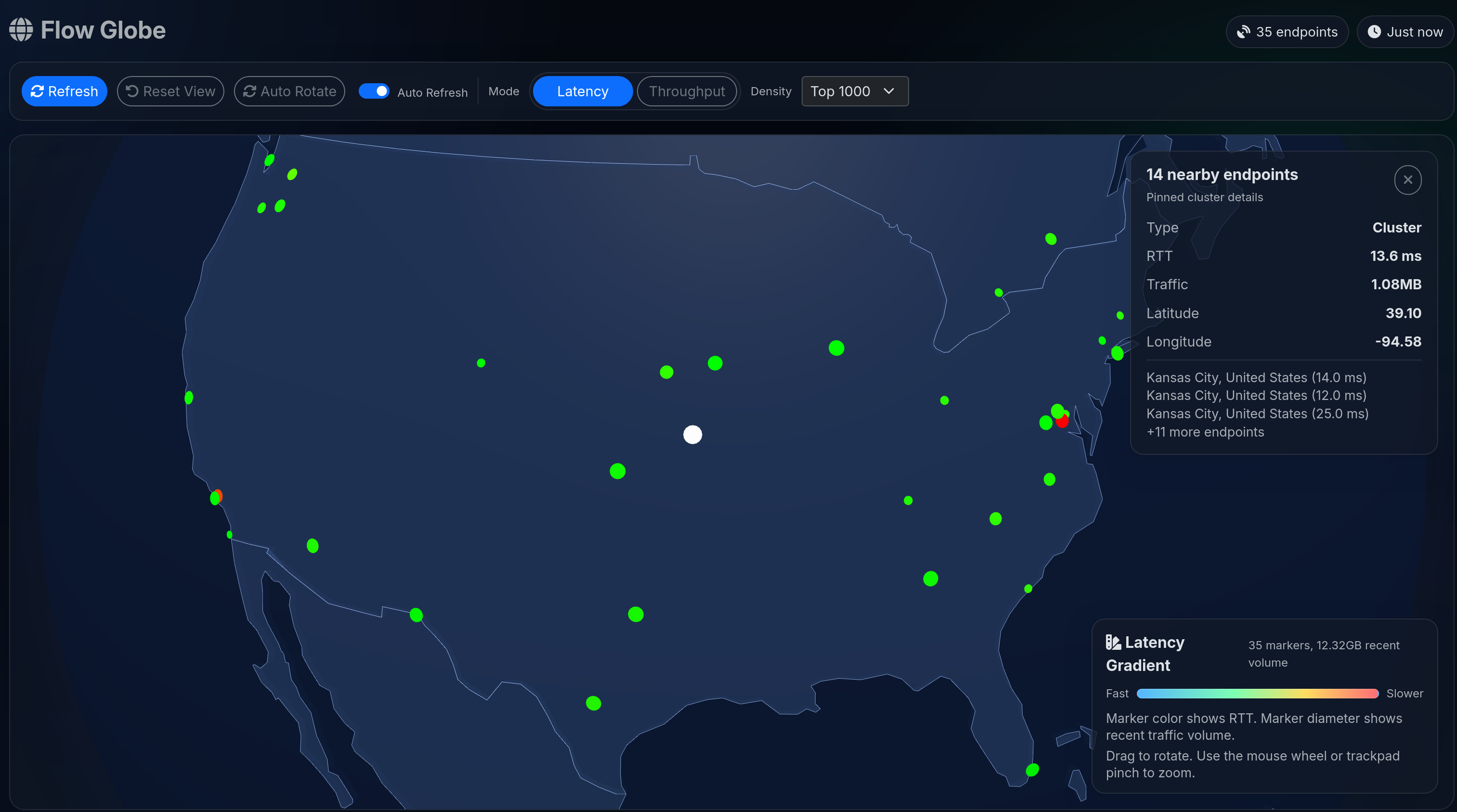
Traffic Geography
Map flows and upstream patterns visually when you need to understand where subscriber traffic is actually going.
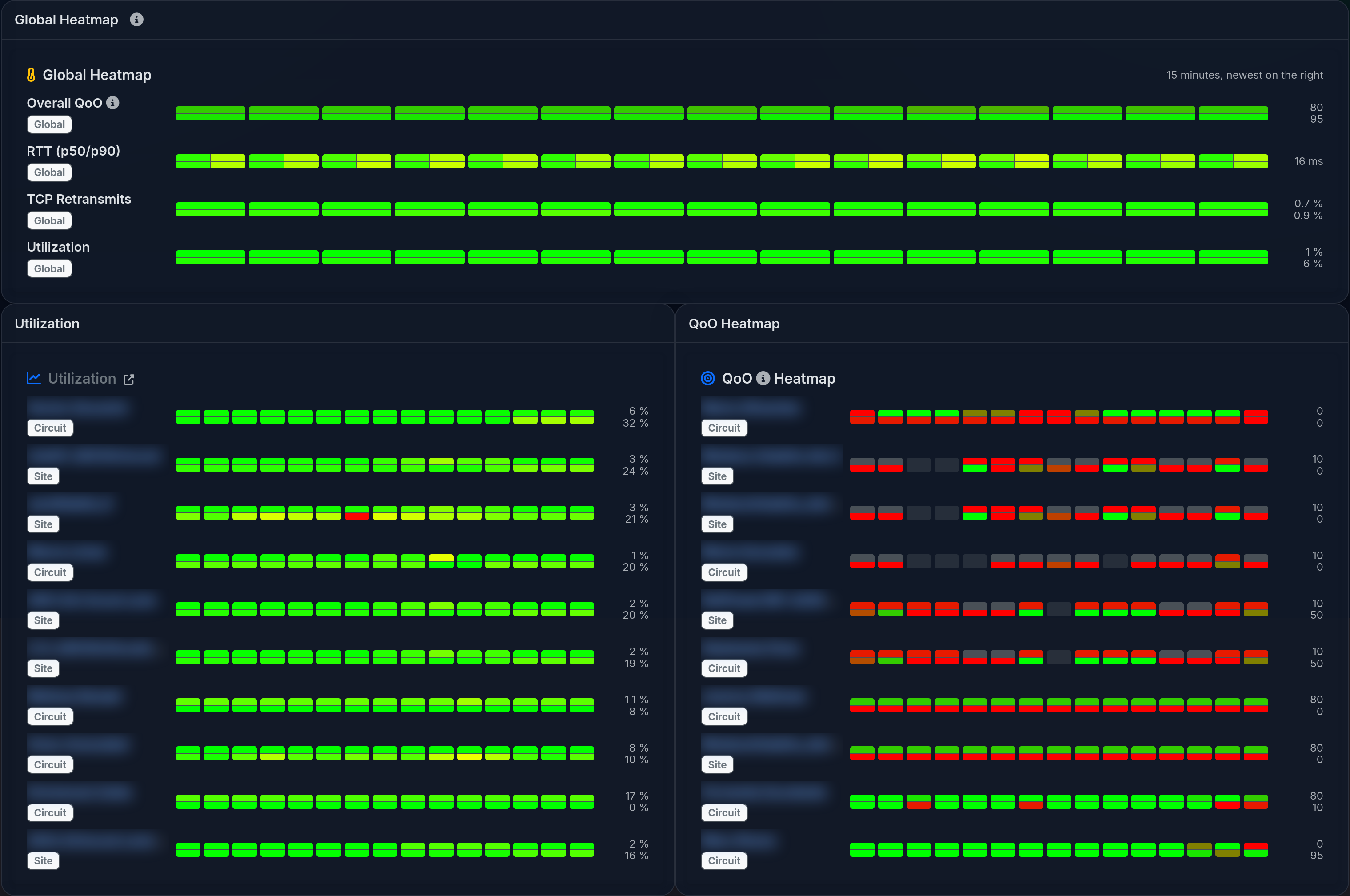
Operational Signals
See latency, retransmits, and quality together so changes are obvious before you open a larger chart.
RTT
Latency drift
Retransmits
Error density
QoO
Quality strip
Why Operators Switch
Customer-focused operators need precise shaping, real choke-point control, and faster evidence when subscribers feel the network.
Precise shaping, not black-box guesswork
LibreQoS uses explicit queue control and CAKE-backed fairness instead of vague congestion logic that is harder to predict under load.
Shape at the real choke point
Topology-aware enforcement keeps shaping aligned to the AP, site, OLT, backhaul, or shared segment that is actually congested.
Move from symptom to subscriber evidence
Operators can go from a network-wide issue into site, circuit, and subscriber-level evidence with RTT, retransmits, QoO, and Insight drill-down.
Live Product View
LibreQoS lets operators watch throughput, queue build-up, and RTT change live on an individual circuit, not just in after-the-fact charts.
See the shaping outcome on a live circuit instead of inferring it from aggregate KPIs.
Deploy
Run 1 CLI line, open the WebUI, complete setup, and validate against a known-good pilot before production cutover.